
8 Web Development Trends to Watch Out for in 2026
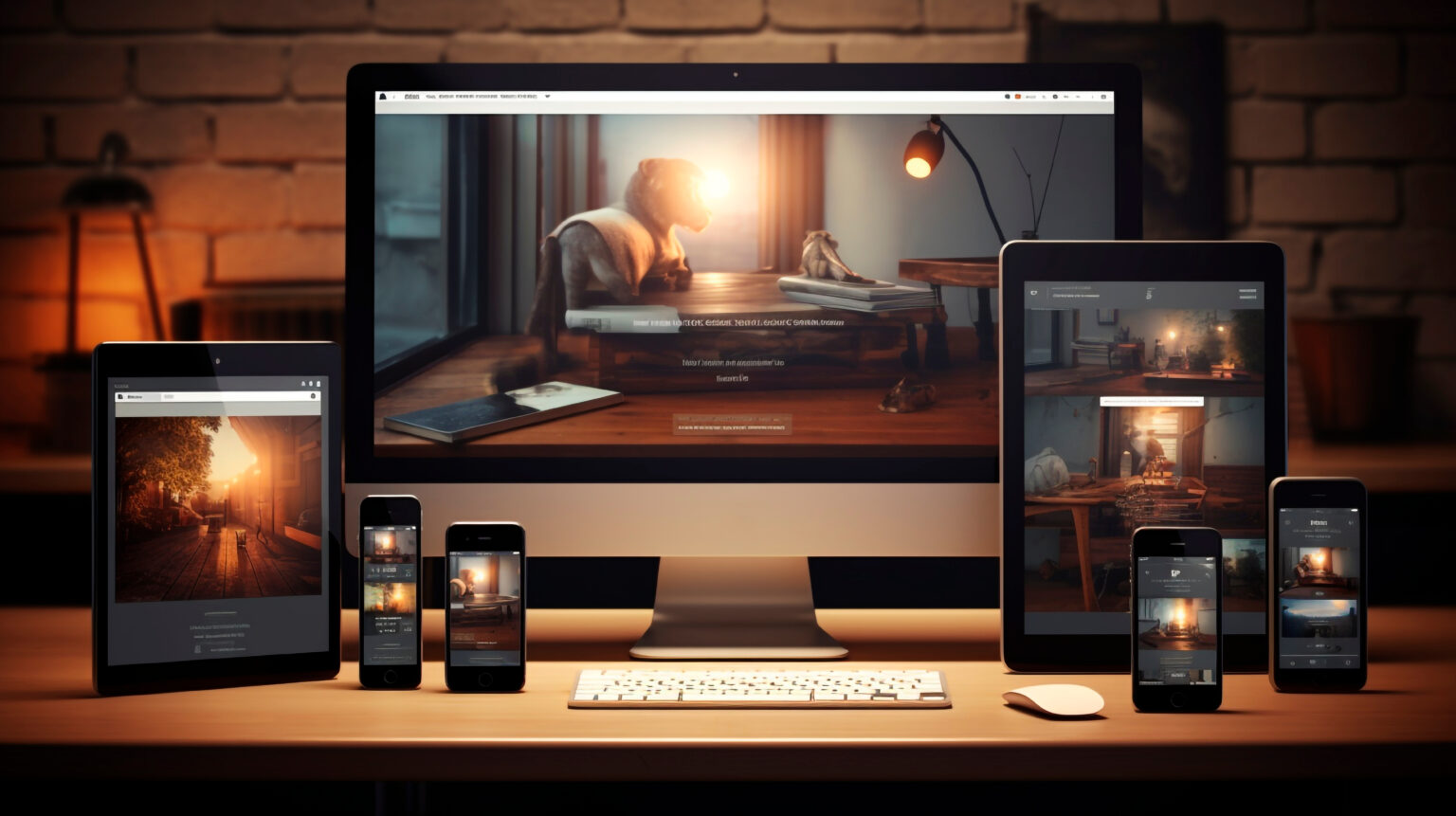
Another year is winding down. And before you can even mutter “where did that go?”, 2026 will be knocking on the door—along with another wave of digital change.
Marketing in 2025 has been anything but quiet. Generative AI reshaped search. Social platforms—especially TikTok—cemented themselves as serious sales channels. Short-form video kept its crown. And the pace of innovation? Brutal.
So what’s next?
Big question. Huge, in fact. Which is why, instead of trying to predict everything, we’re zeroing in on one area at the heart of every business: websites and web development.
What’s Changing in Web Development?
Despite the rise of social platforms, marketplaces, apps and aggregators, the humble website remains the single most important marketing asset a business owns. It’s your digital headquarters—the home of your brand story, your content, your products, your SEO, your campaigns, and your revenue.
But because websites feel… permanent, they’re often neglected. They’re “there”, they “work”, and they rarely scream for attention. Meanwhile, design standards shift, technology evolves, user behaviour changes and search transforms.
Websites evolve just like everything else, and staying ahead matters.
And yes, AI is the engine behind much of the seismic change happening right now. But not all of it.
So we’ve split our 2026 predictions into two camps: Four AI-driven trends, and four distinctly human ones.
Four AI Trends in Web Development
1. Hyper-Personalised Browsing
Hyper-personalisation takes standard personalisation and turns the dial to eleven. It’s AI-powered, behaviour-responsive, and capable of adapting a browsing experience for an individual, not a demographic group.
Early-stage personalisation is already familiar: pop-ups, recommendations, dynamic banners. But the next stage—dynamic content—will rewrite the rulebook. Pages will morph in real time based on user behaviour, learning style, accessibility needs and predicted intent.
Your website won’t just show users what they usually like. It will show them what they want right now.
2. Agentic Web Experiences
AI isn’t just a tool for businesses—it’s becoming a tool for consumers. Agentic AI, the next evolution of LLMs, allows users to deploy personal AI assistants that browse, search, compare, and even purchase on their behalf.
Which means: Your website must become machine-readable.
Structural clarity. Metadata-rich pages. Clean semantic hierarchies. Descriptive labels. In many ways, it’s the same groundwork required for generative search optimisation (GEO). Businesses that prepare for one will automatically prepare for the other.
As AI agents begin surfing the web alongside humans, the companies that cater to both will win.
3. Conversational Interfaces
Before ChatGPT stole the spotlight, we had Alexa, Siri, Cortana and the rest. Voice interaction was the first interface to break us free from the screen.
Today, voice assistants facilitate 20% of all searches. But their potential remains largely untapped—because most are tied to big-tech ecosystems.
That changes when voice AI becomes embedded directly into websites.
Low-code builders and chatbot tools are making voice integration increasingly accessible. Soon, websites will let users navigate, shop, learn and interact using natural conversation.
It won’t replace screens overnight, but early adopters will reinvent UX in a way that feels more human than ever.
4. 3D Spatial Design
While VR isn’t mainstream yet, generative AI is making 3D content dramatically more accessible—and this is the first domino to fall in the timeline toward immersive, spatial web experiences.
Stage one: 3D product models users can rotate and explore.
Stage two: Interactive environments—virtual shop floors, spatial product tours, game-like UX.
Stage three: AR blends—virtual try-ons, interactive planning overlays.
Eventually, these threads weave into the early fabric of a spatial, immersive internet. Websites won’t live on screens—but in environments.
2026 won’t deliver the metaverse. But it will deliver the building blocks.
Four Human Trends in Web Development
1. Scrollytelling
Human beings are hardwired for stories—and scrollytelling transforms static pages into immersive, narrative-driven experiences.
Images shift as you scroll. Animations unfold in context. Sound, motion, and micro-interactions enrich the journey.
It’s not a gimmick. It’s a powerful way to communicate values, history, mission, sustainability, product purpose—anything that deserves more meaning than a paragraph on a page.
Done right, scrollytelling turns your website into an experience customers remember.
2. Accessibility as Creative Default
Accessibility is no longer a compliance checkbox—it’s a creative advantage.
Inclusive design prioritises simplicity, clarity, consistency and ease of use. And those principles create universally better websites for everyone, not just users with additional needs.
Search engines reward it. Users appreciate it. Brands benefit from it.
2026 will mark a shift from “meeting guidelines” to designing inclusively from day one.
This also means fewer cookie-cutter templates—and more thoughtful custom builds that reflect real user behaviour.
3. Privacy by Design
With AI raising the stakes on data usage, privacy can’t be tacked on at the end. It has to be baked into the architecture.
Users expect:
- Transparency
- Control
- Strong security
- Clear value exchange
AI-driven UX like hyper-personalisation demands more data—so businesses must reinforce their sites with encryption, zero-trust frameworks, and robust consent experiences.
Trust becomes a strategic differentiator.
4. Sustainable Web Design
As AI and cloud computing intensify digital energy consumption, sustainability moves from “nice to have” to non-negotiable.
More than 80% of UK consumers believe businesses should be responsible for environmental protection—and websites aren’t exempt.
Sustainable design means:
- Lightweight builds
- Optimised, compressed media
- Efficient coding
- CDNs and caching
- Lower digital waste
Cleaner code. Faster loads. Smaller footprint. Good for UX, SEO and the planet.
The Bottom Line: 2026 Will Reward the Builders
Websites are no longer static digital brochures. They’re evolving ecosystems—alive with AI-driven intelligence, shaped by human creativity, and accountable to users who expect transparency, speed, connection and purpose.
The winners in 2026 won’t be the brands with the flashiest features. They’ll be the ones who build websites that feel personal, intuitive, ethical and effortless.
And if you want a partner who can help you create a future-ready website that performs today and evolves tomorrow, Key Element is here to help.
Frequently Asked questions
Why is web development changing so quickly?
Web development evolves as new technologies, user behaviours, and digital expectations emerge. AI innovations, accessibility standards, privacy measures and sustainability pressures are accelerating that change, making websites more dynamic, intelligent and user-centric than ever.
Are websites still important when social media and marketplaces dominate online attention?
Absolutely. Your website is the only digital asset you fully own. It anchors your SEO, houses your content, supports your campaigns and provides the most reliable platform for communicating your brand story and converting customers.
What is scrollytelling and why is it effective?
Scrollytelling blends text, visuals, animation and interactive elements that trigger as the user scrolls. It turns long-form content into a dynamic, engaging narrative—ideal for brand stories, campaigns, product education and thought leadership.
How can websites be more environmentally sustainable?
Sustainable web design reduces energy consumption by optimising code, compressing media, using efficient hosting/CDNs, and removing unnecessary digital weight. Cleaner sites load faster, rank better and lower the carbon impact of digital operations.
Which of these trends should small businesses prioritise?
Start with the fundamentals: accessibility, sustainability, clear structure, and privacy. Then explore AI-driven enhancements like personalisation or conversational tools when they align with your goals and customer needs.
Services you may be interested in
Social Media Marketing
By leveraging Social Media, businesses can enhance their online presence, build stronger relationships with their audience by driving more engagement and conversions.

SEO Services
We specialise in catapulting businesses to the forefront of their digital visibility, ensuring they not only compete but they dominate in their respective markets.

Robert Cowell